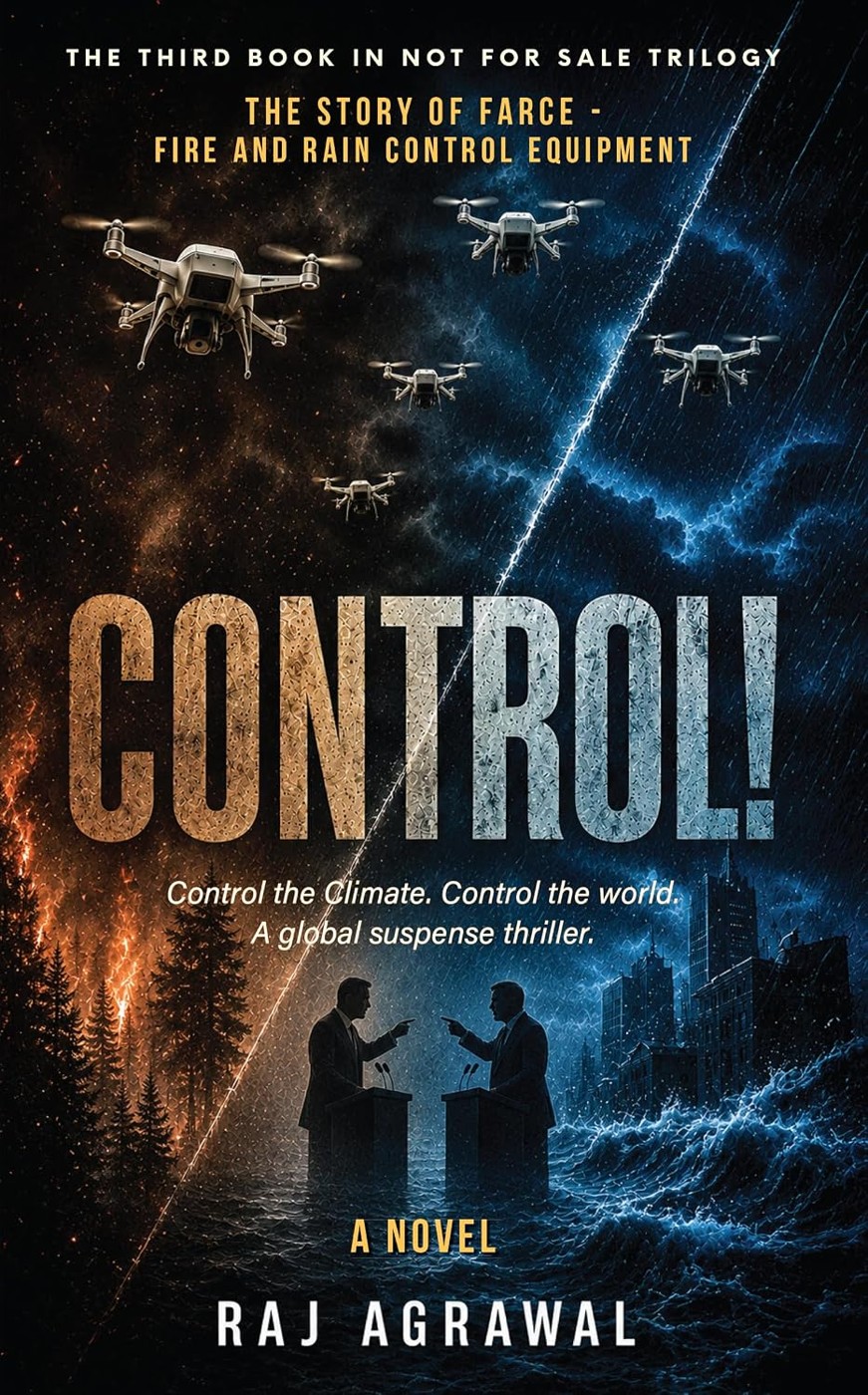
Before FARCE becomes a political prize, there is a house near the woods and a visit meant for a wedding. In the published first prologue, Ravi arrives with his granddaughter Mira and notices fire among the trees. The people welcoming them believe it is harmless. That small reassurance makes the danger feel close: we recognize the wish to trust someone who says everything is all right.
The loss that follows gives Ravi’s work a personal obligation. A machine that can suppress fire is an answer to something he could not prevent. When Mira offers to help him, the promise reaches beyond a scientist’s ambition. Someone young enough to depend on him is also listening to what he says he will do.
Then the novel’s premise places that promise inside an election campaign. The question changes. Can a tool created to protect people remain theirs when its success is worth power to somebody else? The tension comes from competing definitions of success: a community needs safety, a researcher needs a dependable system, and a politician wants a result that can be claimed.
We selected Control! for that conflict between purpose and possession. It is the third book in the Not for Sale trilogy, so readers who like to follow a scientist’s history can begin with Not for Sale! and Reversal!. For a reading group, start here: when a public good depends on one invention, who should be trusted to control it?
Selection note based on the author’s published first prologue, chapter opening and official synopsis; it is not a claim to have read the complete novel.
Read the first prologue ↗ · Read chapter one ↗ · Author’s book page ↗